
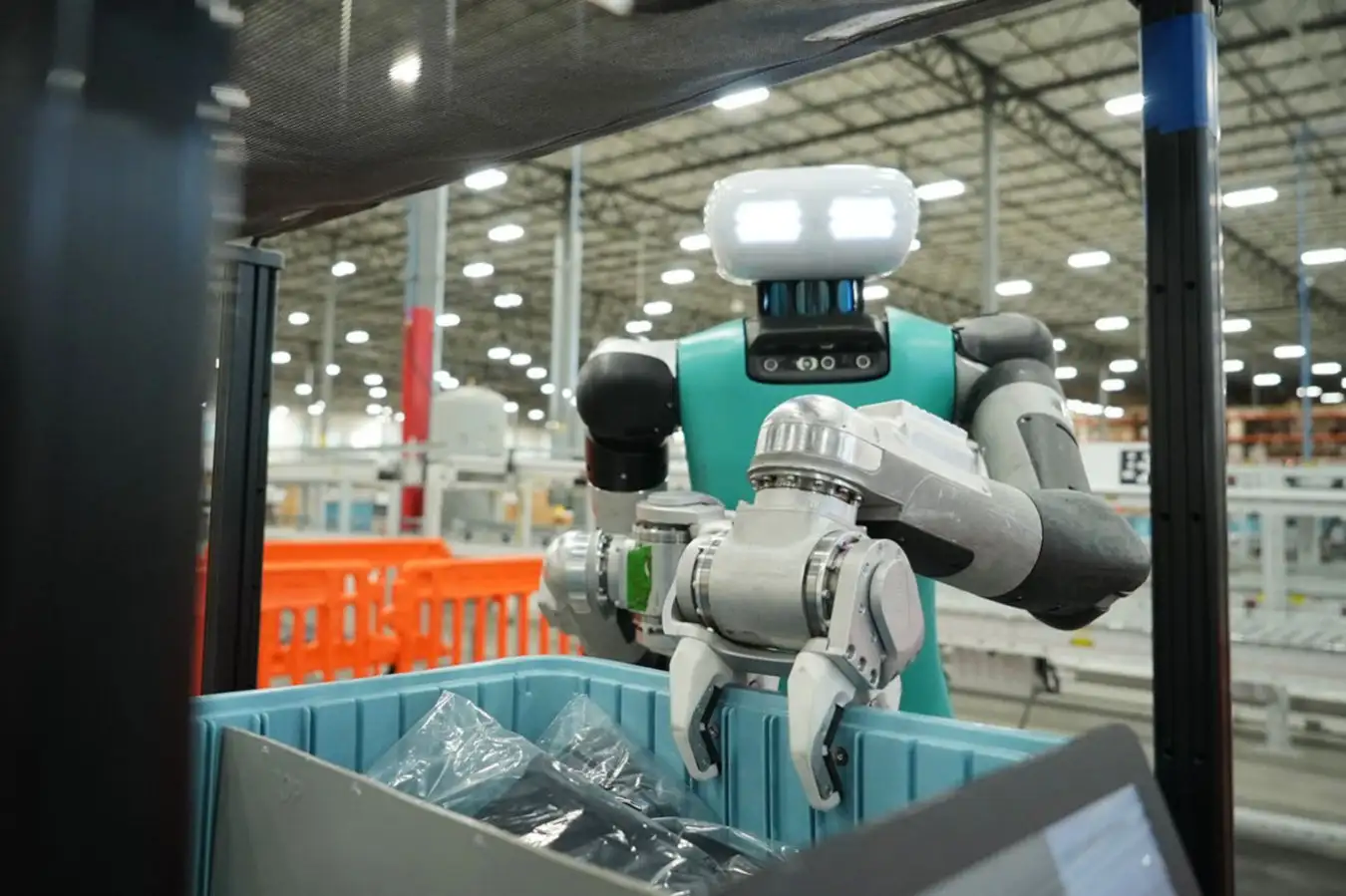
ROBOTICS REVOLUTION UNLEASHED: HOW 3 NEW GPLS WILL CHANGE YOUR WORKPLACE THIS YEAR
Breaking News: April 2026 will be remembered as the turning point for robotics. This week, three of the world’s leading robotics firms – Tesla, Figure AI (partnering with OpenAI), and Boston Dynamics – have simultaneously released their highly anticipated “General Purpose Laborer” (GPL) units for immediate commercial purchase. This isn’t about theoretical applications anymore; it’s about tangible integration into businesses across various sectors, starting NOW.
Here’s what you need to know about these ground-breaking machines and how they could impact your industry:
The Game Changers: Meet the New Workforce
1. Tesla Optimus Gen 4: The Logistics Powerhouse
* Key Feature: Mass-producible, cost-effective, and designed for high-volume manipulation.
* Commercial Applications: Expect to see Optimus units in warehouses, distribution centers, and even retail backrooms handling everything from pallet stacking to inventory management. Tesla claims it can perform 80% of current warehouse tasks.
* Impact: Significant potential for efficiency gains in e-commerce fulfillment and supply chain operations. It poses a direct challenge to roles in warehousing and order fulfillment.
2. Figure 03 (Powered by OpenAI Nexus): The Cognitive Assistant
* Key Feature: Advanced AI integration allowing for natural language interaction and adaptive task execution.
* Commercial Applications: This robot is targeting roles requiring more human-like interaction: customer service in retail and hospitality, basic patient assistance in healthcare, and support roles in offices. Imagine a robot that can understand your verbal request to “find the X-ray report for patient Y” or “prepare a table for four in aisle three.”
* Impact: This represents a major shift in roles that were previously thought to be immune to automation. It raises questions about the future of entry-level service and administrative jobs.
3. Boston Dynamics Atlas Commercial v2: The Unyielding Muscle
* Key Feature: Extreme durability, strength, and ability to operate in hazardous environments.
* Commercial Applications: This is the workhorse for industries where human safety is compromised: construction sites (lifting heavy materials), emergency response (navigating disaster zones), and heavy manufacturing.
* Impact: Potential to drastically reduce workplace injuries and accelerate projects in sectors that are traditionally high-risk.
What Does This Mean for Businesses and Employees?
• For Businesses: The allure of increased efficiency, reduced labor costs, and 24/7 operational capacity is immense. Companies are likely to see a rapid adoption curve, especially in sectors facing labor shortages or high operating risks.
• For Employees: This is a wake-up call. Roles involving repetitive physical tasks, predictable environments, or basic customer interaction are most vulnerable. The emphasis is shifting towards skills that require complex problem-solving, critical thinking, creativity, emotional intelligence, and human-to-human interaction – skills that GPLs currently struggle to replicate.
• The New Demand: Expect to see a surge in demand for “Robot Supervisors,” “AI Ethicists,” and “Human-Robot Interface Specialists.” There will also be a greater need for upskilling and retraining programs.
The Immediate Next Steps:
• Businesses: Assess which of your operational tasks are ripe for automation. Research the GPLs suited to your needs and begin planning for integration. Consider the ethical and employee relations aspects.
• Employees: Focus on developing uniquely human skills. Explore fields where AI complements rather than replaces human input. Invest in continuous learning and adaptability.
This week’s release isn’t just about new gadgets; it’s about reshaping the very nature of work. The robots are ready. Are you?

Leave a Reply